
Top SEO Mistakes That Hurt Your Rankings - and How to Fix Them
Search Engine Optimization (SEO) plays a critical role in driving visibility, traffic, and business growth. Yet, many websites fall short because of simple mistakes. Here are some of the most common SEO mistakes:
Keyword stuffing
Ignoring mobile optimization
Using duplicate content
Missing meta descriptions
Slow website speed
Poor internal linking
Overlooking user experience
A study by BrightEdge found that 68% of online experiences start with a search engine. This shows how important it is to keep your SEO efforts sharp — small mistakes can cost you rankings, traffic, and customers.
In this blog, you’ll find a breakdown of the most common SEO mistakes, why they matter, and practical solutions to fix them. By the end, you’ll have clear steps to improve your website’s SEO and attract more organic traffic.
Common SEO Mistakes That Harm Your Website's Performance
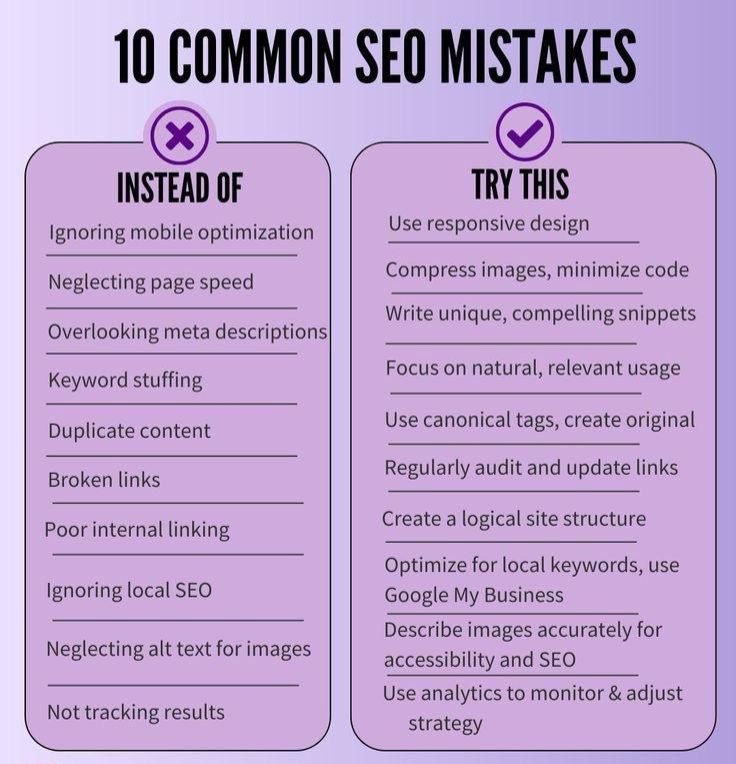
Many websites struggle to achieve strong search rankings because of recurring SEO mistakes. These errors often reduce visibility, cut down organic traffic, and damage both user experience and trust. Below is a clear breakdown of the most frequent pitfalls, their impacts, and expert-backed solutions.
Frequent SEO Mistakes
Ignoring Keyword Research:
Not identifying and targeting the right keywords prevents your content from reaching its audience. Picking overly competitive or low-volume keywords wastes effort
Keyword Stuffing or Over-Optimization:
Overloading your content with keywords makes it feel unnatural, leading to search engine penalties.
Keyword Cannibalization:
Multiple pages targeting the same keyword compete against each other, weakening your ranking power .
Publishing Low-Quality or Duplicate Content:
Thin, repetitive, or duplicated pages signal low value to search engines and can hurt rankings .
Neglecting Mobile Optimization:
Non-mobile-friendly websites experience higher bounce rates and lose significant traffic.
Poor Website Loading Speed:
Slow-loading websites frustrate users and often rank lower. Causes include large uncompressed images, excessive code, and missing caching.
Broken Links and Outdated Redirects:
Broken internal or external links disrupt the user experience and diminish your site’s trustworthiness.
Weak Internal Linking Structure:
Poorly connected pages make it harder for search engines to understand your site’s structure and priorities .
Skipping On-Page SEO Elements:
Missing or poorly crafted meta titles, descriptions, and heading tags lower click-through rates
Overlooking Technical SEO:
Problems like an unoptimized robots.txt file, missing HTTPS, or a messy site structure block proper crawling and indexing.
Not Monitoring SEO Performance:
Without regular checks, it’s easy to miss errors or lose ranking opportunities .
How These Mistakes Impact Your Website Rankings
Low-Quality Content:
Increases bounce rates and shortens dwell time, sending negative signals to search engines
Slow Website Performance:
Drives users away and drops engagement levels, directly impacting rankings
Broken Links:
Create trust issues and disrupt search engines’ ability to fully crawl your site .
Neglecting Mobile Optimization:
Misses out on mobile audiences and hurts rankings significantly
Weak Keyword Targeting:
Makes it difficult for your intended audience to discover your site.
Expert Tips to Fix and Avoid These Mistakes
Conduct detailed keyword research and focus on long-tail opportunities
Write naturally for readers, not for search engines
Perform regular site audits to spot and fix issues early
Speed up your site by optimizing images and streamlining code
Build a smart internal linking system to support crawlability
Write unique, engaging meta titles and descriptions with clear headings
Monitor SEO performance regularly and adapt to changes
Why Error-Free and Optimized Websites Matter for SEO
Enhances User Experience:
Error-free sites (no broken links, 404s, or slow pages) keep visitors engaged, reduce bounce rates, and increase session time — all important ranking factors.Improves Search Engine Crawlability:
A clean site structure helps search engines crawl and index your pages effectively, boosting visibility in search results.Boosts Rankings and Traffic:
Fast-loading, mobile-friendly websites with clear navigation perform better in search rankings and attract more organic traffic.Builds Trust and Credibility:
A smooth, professional-looking website builds user trust and signals reliability to search engines, improving your authority.Supports Long-Term Growth:
Regular maintenance and optimization protect your rankings and ensure your site continues to grow without relying heavily on paid ads.
Action Point:
Schedule a full website audit every quarter.
Fix technical errors like broken links, duplicate content, and slow page speed immediately.
Prioritize mobile optimization and update your SEO strategy based on audit findings.
Solutions for Common SEO Mistakes
Fixing SEO mistakes requires practical action and real examples. Here’s a full guide that not only explains each solution but shows how top websites apply these strategies successfully.
1. Ignoring Keyword Research
Solution:
Conduct thorough keyword research using tools like Ahrefs, SEMrush, or Google Keyword Planner.
Focus on long-tail keywords that are highly specific to your business.
Analyze competitors to find keyword gaps you can target.
Example: Imagine running an online pet store. Instead of only targeting “dog food” (which is very competitive), you could focus on “organic dog food for puppies” to attract a more specific audience.
2. Keyword Stuffing or Over-Optimization
Solution:
Write naturally for humans first.
Use primary keywords strategically in titles, meta descriptions, and once or twice in the body.
Mix in synonyms and related terms to maintain a natural flow.
Example: Instead of repeating “best coffee beans” 20 times in a blog post, Starbucks structures its content to mention terms like “premium Arabica beans,” “fresh coffee,” and “artisan blends” — all while staying user-friendly.
3. Keyword Cannibalization
Solution:
Consolidate similar pages targeting the same keyword into one comprehensive resource.
Use 301 redirects for merged pages.
Differentiate content topics clearly if pages must be separate.
Example: HubSpot found they had two blogs ranking for “email marketing tips.” They merged them into a single detailed guide, which later jumped into the top three search results.
4. Publishing Low-Quality or Duplicate Content
Solution:
Focus on creating original, in-depth content.
Use tools like Copyscape or Siteliner to find and fix duplicate content.
Offer fresh insights, data, or expert opinions.
Example: Backlinko consistently publishes updated, unique guides on SEO with original case studies, helping them dominate competitive keywords like “SEO techniques.”
5. Neglecting Mobile Optimization
Solution:
Switch to responsive web design that adapts to all devices.
Optimize images and interactive elements for smaller screens.
Test your site using Google’s Mobile-Friendly Test tool.
Example: Amazon’s mobile site loads fast, fits perfectly on any device, and offers simplified navigation — contributing to millions of mobile conversions every year.
6. Poor Website Loading Speed
Solution:
Compress images using tools like TinyPNG or ImageOptim.
Minimize JavaScript and CSS files.
Implement browser caching and use a reliable hosting provider.
Example: Pinterest reduced wait times by 40% after improving their site speed, leading to a 15% increase in SEO traffic.
7. Broken Links and Outdated Redirects
Solution:
Regularly scan your site using Screaming Frog or Ahrefs Site Audit.
Fix broken links or set up proper redirects (301 for moved pages, 410 for deleted ones).
Example: Wikipedia rigorously maintains internal and external links across millions of pages. This proactive maintenance supports its strong rankings across millions of search queries.
8. Weak Internal Linking Structure
Solution:
Add internal links naturally to relevant articles.
Create cornerstone content pages that link out to supporting blogs and pages.
Use descriptive anchor text.
Example: Neil Patel’s blog expertly links related articles like “Content Marketing” pages to “SEO Strategy” guides, increasing session duration and crawlability.
9. Skipping On-Page SEO Elements
Solution:
Write unique and compelling meta titles and meta descriptions.
Use a logical heading structure (H1 → H2 → H3).
Incorporate keywords naturally in the title, first 100 words, and subheadings.
Example: Shopify’s product pages have well-crafted titles, structured headings, and relevant meta descriptions — helping them rank for highly competitive e-commerce terms.
10. Overlooking Technical SEO
Solution:
Set up a clear URL structure.
Use HTTPS for security.
Maintain an updated sitemap and robots.txt file.
Example: BBC’s website architecture is clean, HTTPS-secured, and properly structured with XML sitemaps, enabling efficient crawling and faster indexing.
11. Not Monitoring SEO Performance
Solution:
Track keyword rankings, traffic, and crawl errors using Google Search Console and Google Analytics.
Conduct quarterly SEO audits.
Adjust strategies based on data insights.
Example: After a core algorithm update, Moz tracked sharp dips in some pages, quickly adapted their content strategy, and regained rankings within months.
Quick Reference Table
Mistake | Solution | Real-Time Example |
Ignoring Keyword Research | Use SEO tools, target long-tail keywords | Pet store targeting “organic dog food for puppies” |
Keyword Stuffing | Natural language, synonyms | Starbucks using varied terms |
Keyword Cannibalization | Merge pages, 301 redirects | HubSpot combining blog posts |
Low-Quality Content | Original insights, expert opinions | Backlinko’s SEO guides |
Mobile Unfriendly | Responsive design | Amazon’s mobile-first site |
Slow Site Speed | Compress images, minimize scripts | Pinterest’s 15% traffic growth |
Broken Links | Regular audits, fix links | Wikipedia maintenance |
Weak Internal Linking | Build logical link paths | Neil Patel’s content linking |
Skipping On-Page SEO | Unique meta titles, logical headings | Shopify product pages |
Overlooking Technical SEO | HTTPS, clean structure | BBC’s optimized platform |
Ignoring SEO Performance | Use GSC, analytics | Moz tracking updates |
Clear Steps to Attract More Organic Traffic and Improve Your Website Rankings
1. Perform Comprehensive Keyword Research
Action Step:
Use keyword research tools like Google Keyword Planner, Ahrefs, or SEMrush.
Identify high-volume, low-competition keywords relevant to your niche.
Tip:
Target long-tail keywords, which are less competitive and have a higher conversion rate.
2. Optimize Your Content for Search Intent
Action Step:
Focus on creating content that answers your audience’s questions and solves their problems.
Align your content with search intent (informational, transactional, navigational).
Tip:
Break down your content into digestible formats (bullet points, numbered lists, and headings) to improve user experience.
3. Improve Website Loading Speed
Action Step:
Compress images, minimize HTTP requests, and leverage browser caching.
Use tools like Google PageSpeed Insights or GTMetrix to identify issues.
Tip:
Switch to a content delivery network (CDN) for faster load times across different locations.
4. Ensure Mobile-Friendliness
Action Step:
Implement responsive web design that adapts to any screen size.
Test mobile-friendliness using Google’s Mobile-Friendly Test.
Tip:
Keep mobile pages lightweight to improve load speed and user experience on smartphones
5. Optimize On-Page SEO Elements
Action Step:
Add relevant, unique meta titles, descriptions, and header tags (H1, H2, H3) for each page.
Use targeted keywords in URLs and image alt tags.
Tip:
Keep meta descriptions under 160 characters and make them compelling to improve click-through rates.
6. Build High-Quality Backlinks
Action Step:
Focus on acquiring backlinks from authoritative websites in your industry.
Guest post on related blogs or get featured in industry directories.
Tip:
Use tools like Ahrefs or Moz to analyze competitors’ backlinks and try to acquire similar ones.
7. Enhance User Experience (UX) and Engagement
Action Step:
Improve your website’s navigation and design.
Ensure easy access to important content and minimize pop-ups that disrupt the user experience.
Tip:
Regularly check your website’s bounce rate. Lower bounce rates often correlate with better rankings.
8. Regularly Update and Refresh Content
Action Step:
Update old content with fresh information, statistics, and new keywords.
Make sure your website always provides the most up-to-date and valuable content.
Tip:
Schedule content audits to check for outdated posts that need refreshing.
9. Implement Structured Data (Schema Markup)
Action Step:
Add schema markup to your pages for better understanding by search engines.
Use tools like Google’s Structured Data Markup Helper to implement this.
Tip:
Mark up reviews, articles, FAQs, and products to improve the chances of appearing in rich snippets
10. Track Performance and Monitor SEO Metrics
Action Step:
Set up Google Analytics and Google Search Console to track your website’s performance.
Regularly review key SEO metrics like organic traffic, click-through rates, and keyword rankings.
Tip:
Create a monthly SEO report to track improvements and identify areas for further optimization.
Tips to Overcome SEO Errors
1. Conduct Regular Website Audits
Regular audits help identify issues such as broken links, slow page speeds, or duplicate content. Use tools like Google Search Console, SEMrush, or Ahrefs to run comprehensive audits and fix errors promptly.
2. Focus on User Experience (UX)
A smooth, intuitive user experience is crucial. Ensure fast loading times, mobile optimization, and easy navigation. Tools like Google PageSpeed Insights can help pinpoint UX-related issues to address.
3. Implement a Robust Internal Linking Strategy
Create a logical and user-friendly internal linking structure. This not only helps search engines crawl your site more efficiently but also provides users with a clear navigation path, improving engagement and rankings.
4. Resolve Duplicate Content Issues
Ensure that all content on your site is unique and valuable. Use canonical tags to indicate preferred versions of pages if similar content exists across multiple URLs. Tools like Copyscape can help spot duplicate content.
5. Optimize for Mobile Devices
Mobile-friendliness is a major ranking factor. Use responsive design and test mobile compatibility to ensure a seamless experience for visitors. Google’s Mobile-Friendly Test tool can assist in checking your site’s performance.
6. Improve Page Load Speed
A fast-loading site is essential for both users and SEO. Compress images, minimize JavaScript, and leverage browser caching to enhance page speed. You can use tools like GTmetrix to analyze and improve your website’s loading time.
7. Optimize for Featured Snippets
Target featured snippets by structuring your content in a way that answers common questions concisely. Use bullet points, tables, and clear headings to increase the chances of appearing in a snippet.
8. Fix Broken Links and Redirect Issues
Broken links and incorrect redirects harm user experience and can lower your rankings. Regularly check for 404 errors and set up proper redirects (301) using tools like Screaming Frog to keep your site error-free.
9. Target Long-Tail Keywords
Instead of targeting overly competitive keywords, focus on long-tail keywords. These keywords have lower competition and can help you attract more qualified traffic.
10. Optimize On-Page Elements
Ensure each page has a unique and compelling meta title, description, and header tags. These elements directly impact click-through rates and search engine rankings. Tools like Yoast SEO can help optimize these elements.
Choosing the Right Method: Where to Invest Your Efforts
When it comes to SEO, there are several strategies you can adopt depending on your goals and the specific needs of your website. Here’s a breakdown of the various SEO methods and the types of situations in which they are most effective:
1. On-Page SEO
Purpose: To optimize individual pages of your website to improve their rankings in search results.
Best for: Websites that need immediate improvements to content quality and keyword targeting.
Key Elements to Focus On:
Title Tags
Meta Descriptions
Header Tags (H1, H2, H3)
Content Optimization (targeted keywords, internal linking)
Image Optimization (alt tags, size, compression)
Why Choose On-Page SEO?
On-page SEO is crucial for improving specific pages of your site and ensuring they are optimized for both users and search engines. If your website has quality content but is not ranking well, optimizing on-page elements will often yield quick, measurable results.
2. Off-Page SEO
Purpose: To build your site’s credibility and authority by earning backlinks from other reputable websites.
Best for: Websites that need to increase their online presence and authority.
Key Elements to Focus On:
Link Building (guest posts, outreach, and digital PR)
Social Media Engagement
Brand Mentions
Influencer Marketing
Why Choose Off-Page SEO?
Off-page SEO is essential for improving your domain authority and attracting more traffic. If you’re in a highly competitive industry, off-page SEO will help you stand out by building trust with search engines.
3. Technical SEO
Purpose: To ensure your website is structured in a way that makes it easy for search engines to crawl, index, and rank.
Best for: Websites with technical issues such as slow loading speed, crawl errors, or poor mobile optimization. Key Elements to Focus On:
Site Speed Optimization
Mobile Optimization
SSL Certificate (HTTPS)
XML Sitemap Creation
Robots.txt File Configuration
Structured Data (Schema Markup)
Why Choose Technical SEO?
If your website is experiencing issues related to crawling, indexing, or page speed, technical SEO will address these problems. For websites with a solid content foundation but technical hindrances, technical SEO can help improve site visibility and performance.
4. Local SEO
Purpose: To optimize your website to attract local traffic, particularly important for brick-and-mortar businesses.
Best for: Local businesses such as restaurants, retailers, and service providers.
Key Elements to Focus On:
Google My Business Profile Optimization
Local Citations (NAP consistency)
Local Keyword Targeting
Online Reviews and Reputation Management
Location-based Content
Why Choose Local SEO?
Local SEO is perfect for businesses that operate within a specific geographical area. By optimizing for local search terms and ensuring your Google My Business profile is complete, you can increase your visibility in local search results.
5. Content SEO
Purpose: To create high-quality, valuable content that attracts both search engines and users.
Best for: Websites aiming to build long-term traffic through consistent content creation.
Key Elements to Focus On:
Blog Posts and Articles
Infographics and Videos
Resource Pages and Guides
Content Clusters (grouping related content around core topics)
Why Choose Content SEO?
Content is king in SEO. If you’re looking to attract organic traffic over time, content SEO is a must. Well-researched, high-quality content can drive traffic, establish authority, and improve engagement.
The Future of SEO
As search engine algorithms evolve, SEO continues to adapt to changing user behavior and technological advances. Here are some trends shaping the future of SEO:
AI and Machine Learning: Search engines like Google are using AI to understand user intent better and provide more relevant search results. SEO will need to focus on producing content that answers user queries clearly and naturally.
Voice Search Optimization: With the rise of voice-activated devices, voice search optimization will become increasingly important. SEO strategies will need to account for conversational search queries and long-tail keywords.
User Experience (UX) Signals: Google is placing more emphasis on user experience, such as site speed, mobile-friendliness, and content quality. Optimizing for user satisfaction will become a critical ranking factor.
Video SEO: Video content is becoming a larger part of search results. Optimizing video content for SEO, including using descriptive titles and adding transcripts, will become crucial for driving traffic.
E-A-T (Expertise, Authoritativeness, Trustworthiness): Google will continue to prioritize websites that demonstrate expertise, authority, and trustworthiness, particularly in health, finance, and other YMYL (Your Money Your Life) topics.